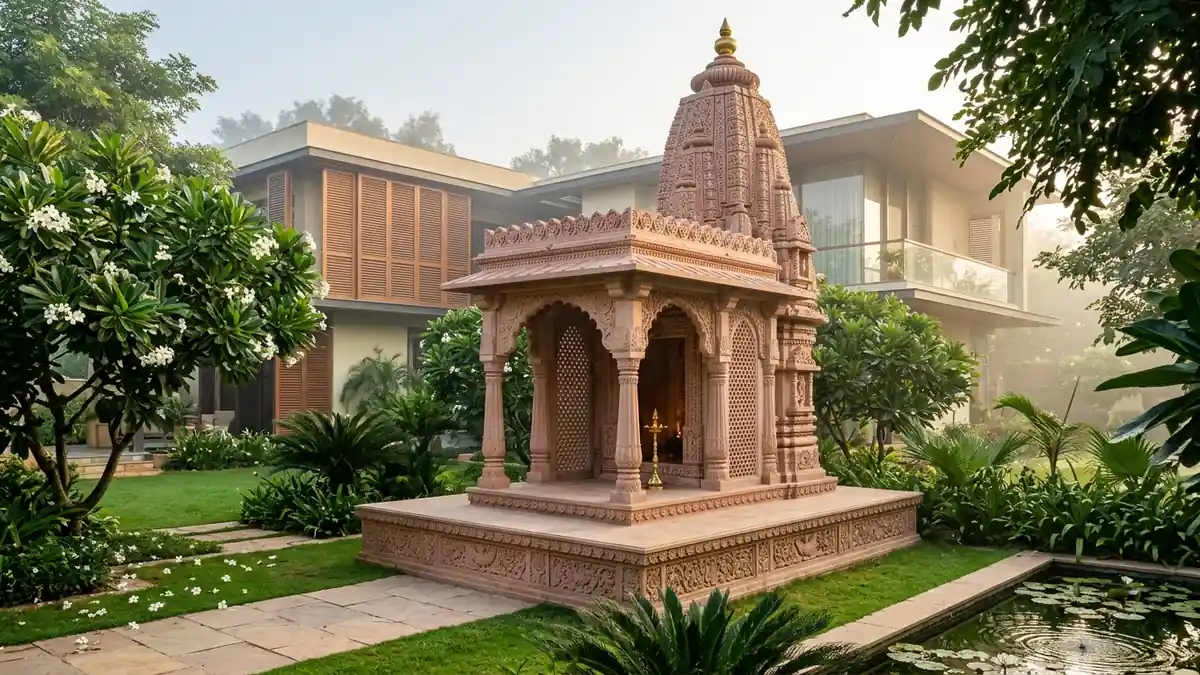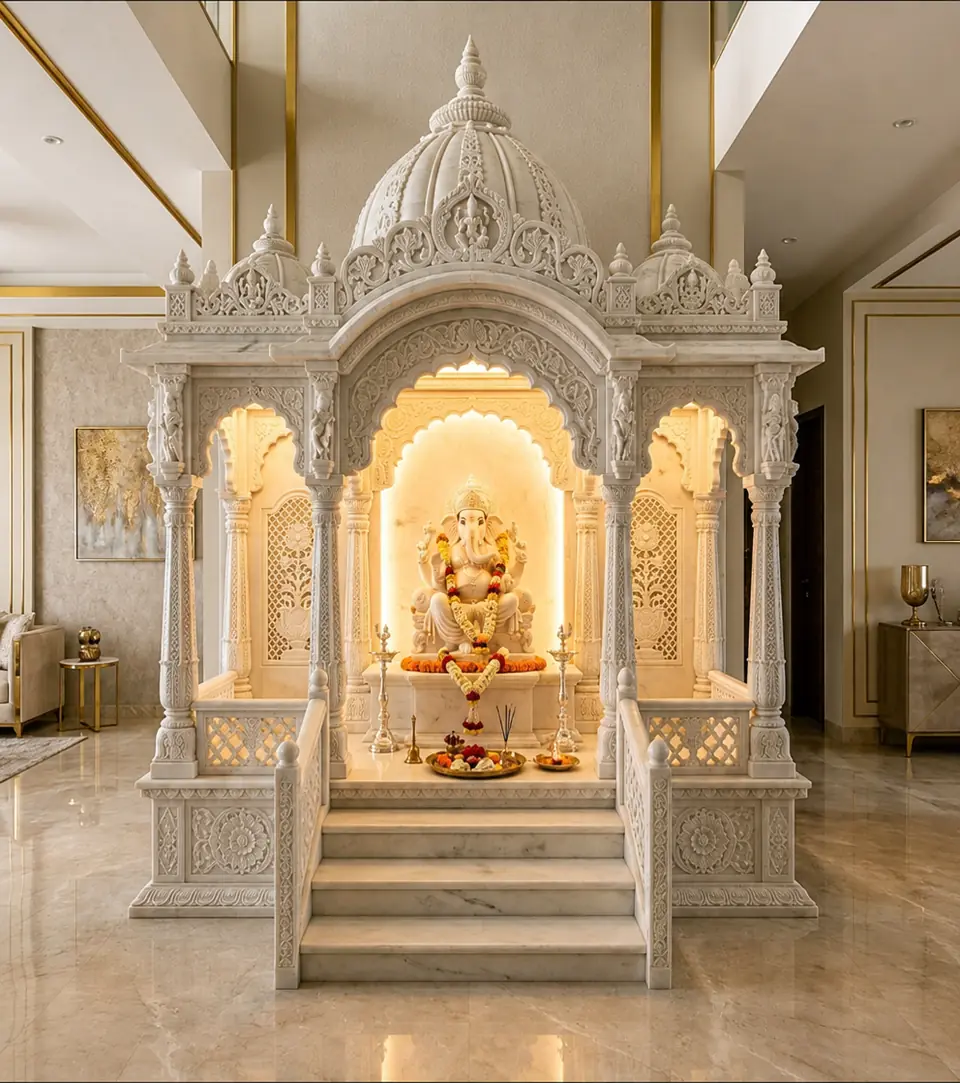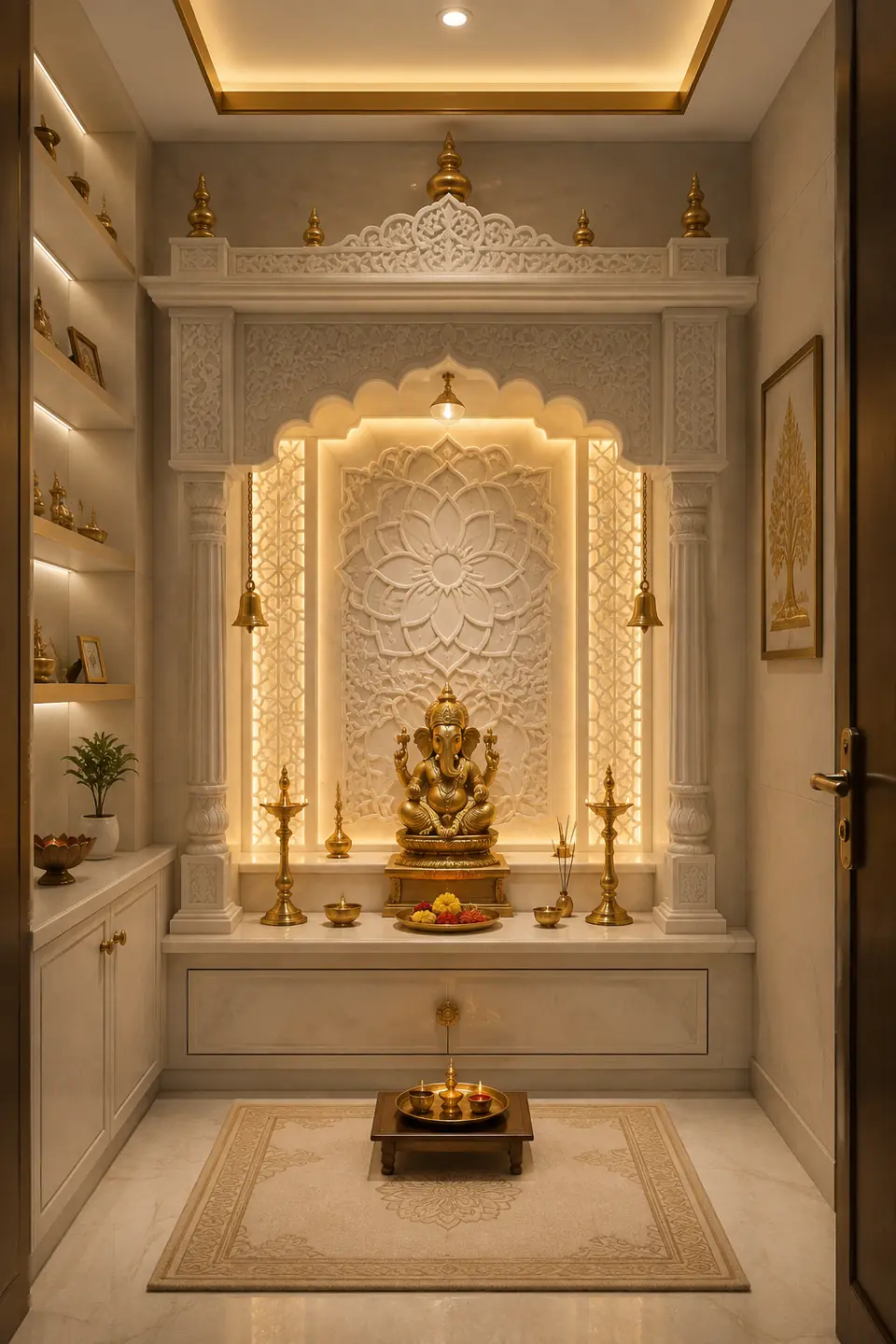

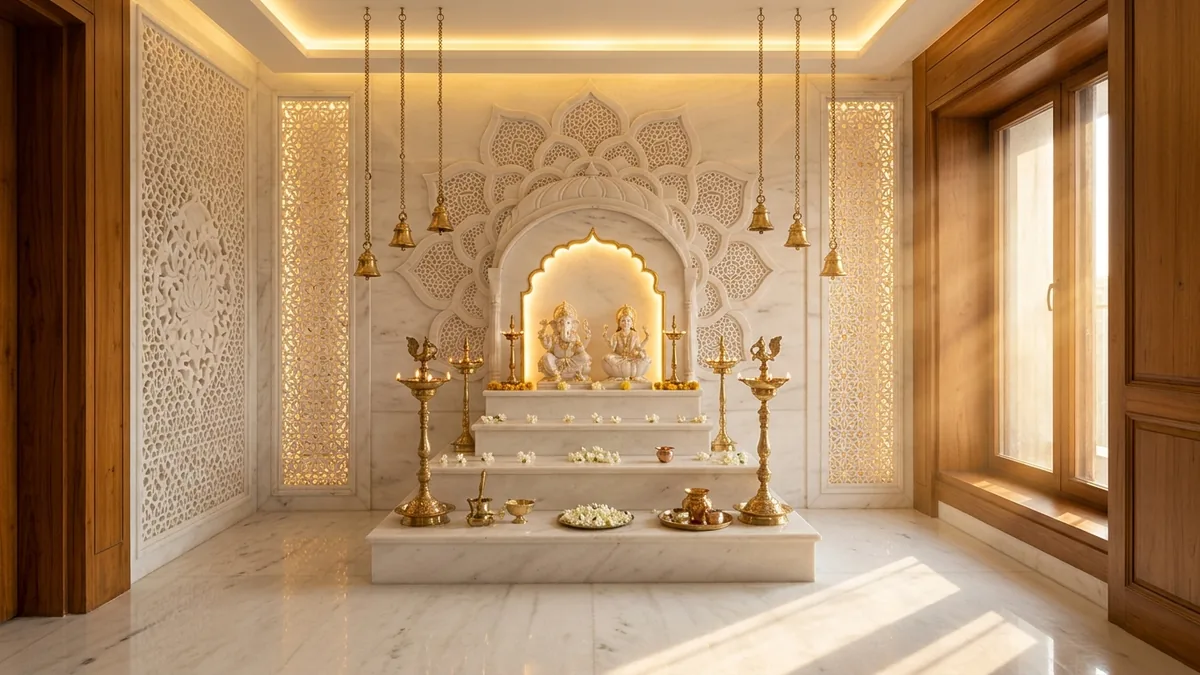
Planning luxury marble pooja room designs for a city flat, duplex penthouse or family bungalow takes more care than picking a white wall slab. A plywood pooja cupboard sags at the hinges and darkens near oil diyas within years, while a carved natural marble temple stays cool, bright and solid for generations. At the Ishatva stone studio and Stone World stone experience center in Indore, our carvers help families build calm prayer spaces using Shilpa Shastra measurements, warm hidden lights and dry stone fixing.
Table of Contents
What Makes Modern Pooja Room Architecture Work in Indian Homes?
Thoughtful modern pooja room architecture clears away clutter while keeping daily prayer warm and peaceful. Homeowners are moving past heavy wooden cabinets that burn near diyas, choosing natural marble walls with neat borders and soft warm light.
When families discuss pooja room layout ideas with their designer, most luxury marble pooja room designs fit one of five simple setups.
- Dedicated Northeast rooms in villas pair full-height Makrana walls with teakwood bell doors and a wide stepped platform.
- Double-height foyer mandaps suit duplex homes with turned marble pillars, side screens and brass bells.
- Recessed wall niches fit four-foot to six-foot flat corners using a hollow marble base and a softly lit lotus panel.
- Wall-hung marble ledges give compact flats a solid stone shelf on hidden steel brackets under a carved Om panel.
- Courtyard-side rooms set a white marble altar beside carved jali windows that cast soft afternoon floor shadows.
Which Indian White Marble Is Best for a Home Mandir?
Choosing the right stone block for a white marble mandir for home rooms depends on how tightly the stone grains lock together. Soft chalky stones soak up kumkum and haldi quickly, while dense Indian white marbles let you wipe drops off in seconds.
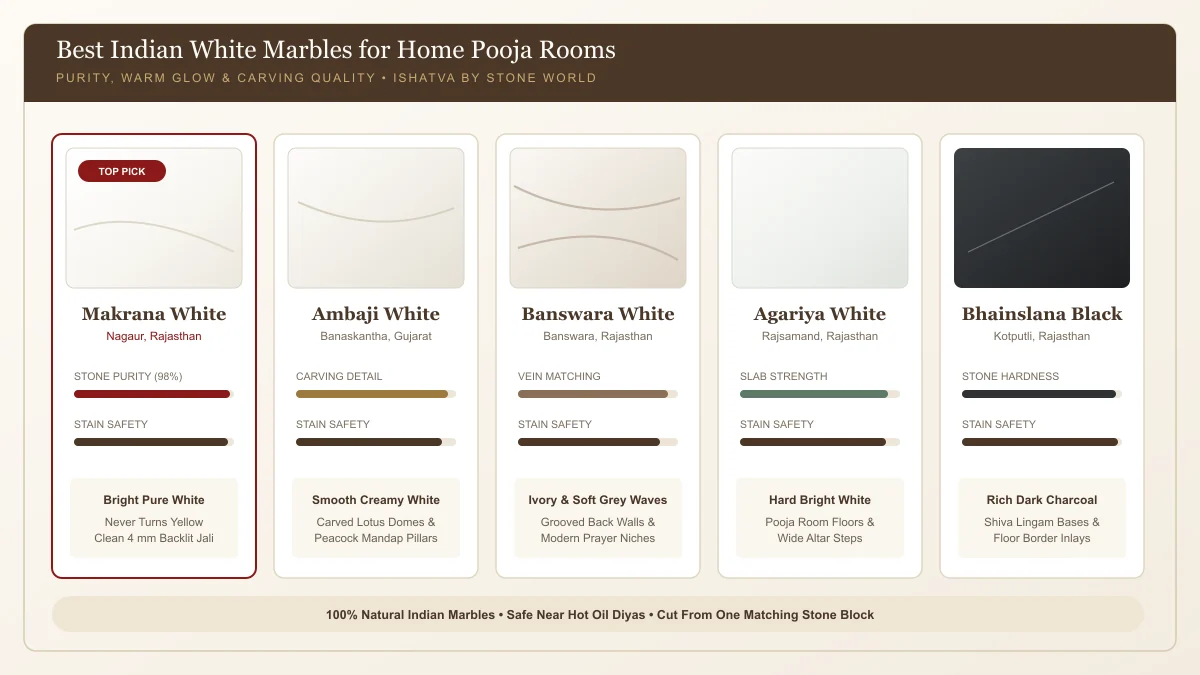
Mined in Nagaur, Makrana white marble has served Indian temples for centuries because its 98 percent pure calcium stone never turns yellow and holds thin four-millimeter jali cuts cleanly.
For deep peacock arches and lotus ceiling domes, Ambaji white marble from Gujarat gives carvers a smooth creamy block suited to fine hand-chisel detail.
For modern walls with soft grey waves, Banswara white marble pairs warmly with brass lamps and teakwood doors.
| Indian Marble | Quarry Area | Colour & Grain | Light Effect | Best Mandir Use |
|---|---|---|---|---|
| Makrana White Marble | Nagaur, Rajasthan | 98% pure milky white | Even warm glow through 18 mm jali | Main mandaps, arches and murtis |
| Ambaji White Marble | Banaskantha, Gujarat | Smooth creamy white | Gentle glow across flower carvings | Lotus domes and bell pillars |
| Banswara White Marble | Banswara, Rajasthan | Ivory with grey-mauve waves | Brings out flowing diagonal lines | Grooved back walls and niches |
| Agariya White Marble | Rajsamand, Rajasthan | Hard bright white stone | Clean surface light bounce | Pooja floors and wide steps |
| Bhainslana Black Marble | Kotputli, Rajasthan | Tight dark charcoal stone | Bold dark outline against warm light | Shiva Lingam bases and borders |
Where Should You Place the Mandir and How High Should the Altar Sit?
Vastu direction and comfortable sitting height go together when planning a prayer room. The Northeast corner catches soft morning sun, while East and North rooms work well in flats where lifts sit in the Northeast.
Simple Vastu Rules and Sitting Heights
- Set the Murti facing West or East so family members face East or West during prayer.
- Keep the mandir off bathroom walls; if needed, leave a three-inch hollow gap behind the marble slab.
- Never place a prayer unit underneath indoor stairs or inside a narrow store passage.
- Build the marble step 450 to 600 millimeters high for floor mats or 750 to 900 millimeters high for chairs.
- Leave four feet of open matte marble floor in front so family members can gather comfortably for aarti.
Sharing idol sizes early with our custom marble murti carvers helps us proportion the arch height cleanly above the crown.
How to Plan Backlit Marble Jali Panels Without Harsh Light Dots
Rushed wiring spoils many pooja rooms once the lights turn on. Pasting bare LED strips right behind a carved jali creates harsh light dots, while sealing power boxes behind fixed marble forces stone removal when a driver fails.
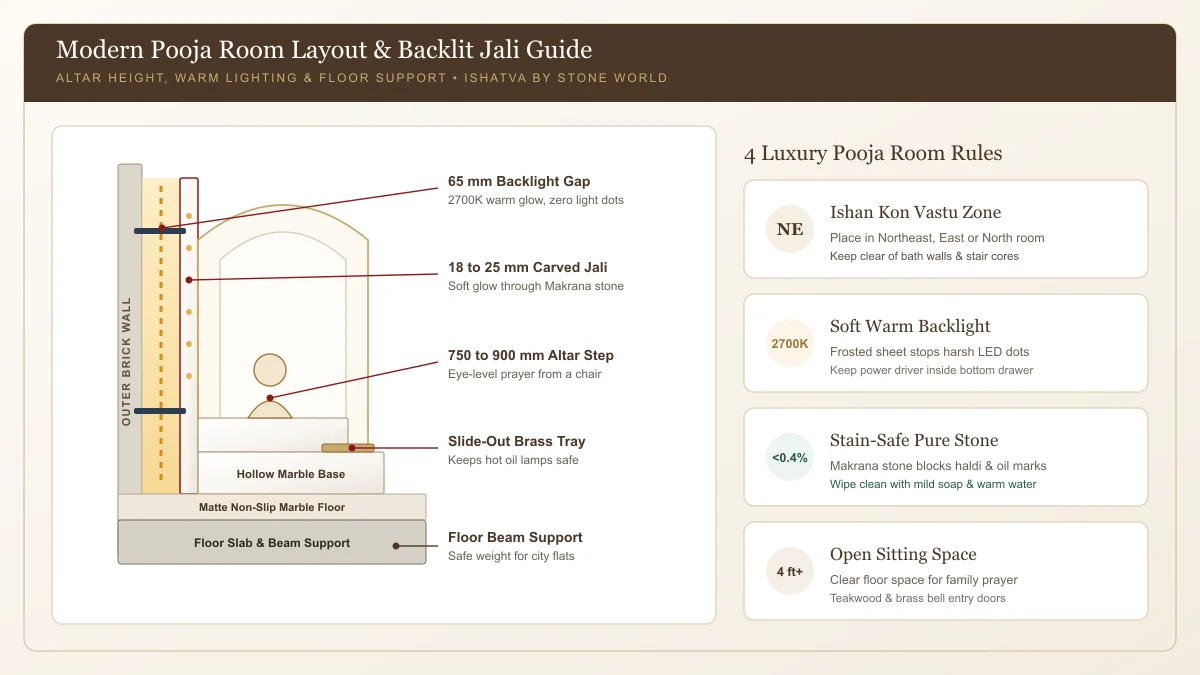
When cutting carved marble jali screens, our workshop keeps slabs 18 to 25 millimeters thick for strength and a soft lotus glow. Leave a 55 to 75 millimeter white-painted gap at the back, add a three-millimeter frosted acrylic sheet in front of 2700K warm LEDs and keep drivers inside a bottom drawer.
Can High-Rise Apartment Floors Hold an Indoor Marble Temple Safely?
Families ordering a handcrafted stone temple indoor for a high-rise flat often ask about floor weight. Solid marble is heavy, so smart carvers build hollow inner bases while keeping outer pillars and steps thick and strong.
We pair hollow marble bases with 20-millimeter back slabs along an outer brick wall or floor beam. Never let a mason use grey cement behind white marble because wet grey cement leaves dark stains inside Makrana stone; lock joints dry with Grade 304 stainless steel pins and white stone glue.
| Home Type | Mandir Width | Typical Weight | Floor & Wall Rule | Safe Fixing Method |
|---|---|---|---|---|
| Apartment Niche | 3 ft to 4.5 ft | 180 to 320 kg | Outer brick wall | Hollow base + SS 304 wall pins |
| Duplex Penthouse | 5 ft to 7 ft | 380 to 620 kg | Over RCC floor beam | Dry pin pillars + white stone glue |
| Ground Villa Room | 7 ft to 10 ft | 650 to 1,100 kg | Solid concrete bed | Interlocking slots + hidden SS pins |
| Wall-Hung Ledge | 3 ft to 4 ft | 85 to 140 kg | 9-inch solid brick wall | Anchor bolts + hidden steel brackets |
Browsing real temples in our indoor white marble mandir collection shows how numbered pillars, arches and drawers fit cleanly inside a finished flat in one day without dust.
If your bungalow also has lawn space for an open-air temple, read our guide on Vastu-compliant outdoor sandstone mandir design to compare weather-ready Rajasthani sandstones.
How to Keep White Marble Safe from Diya Heat, Haldi and Oil Stains
Quartz counters and acrylic sheets contain plastic glue that turns brown under a burning diya. Pure Indian marble has zero plastic binders, staying fire-safe during daily prayer with simple care.
- Fit a slide-out brass tray in the base step to keep hot camphor spoons away from carved edges.
- Rest oil lamps on a rimmed brass plate to catch warm ghee drops.
- Coat flat altar steps once with a clear stone sealer while leaving upright carvings matte.
- Wipe haldi, kumkum and milk drops promptly with warm water and mild soap instead of lemon, vinegar or harsh cleaners.
- Add a carved jali vent near the top of closed pooja doors so lamp smoke escapes cleanly.
How Long Does It Take to Carve and Set Up a Custom Marble Mandir?
Knowing what shapes carving time helps you line up mandir delivery with your home flooring and painting schedule.
- Cutting all parts from one clean Makrana block keeps whiteness even across pillars, steps and arches.
- Matching flowing veins across wide Banswara walls uses extra slab material for a mirror pattern.
- Hand chiselling lotus domes and peacock arches takes dedicated Rajasthani carver weeks.
- Adding brass lines, mother-of-pearl flowers, teakwood drawers and a workshop test build ensures smooth home fitting.
Working with our bespoke sacred stone studio covers Vastu 2D drawings, 3D views, real sample approval, workshop test-fit videos and home setup across India.
Why Check Real Marble Slabs in Person Before Carving Begins?
Phone screens hide the real difference between bright Makrana grain, creamy Ambaji stone and softly veined Banswara slabs. Visiting our stone experience center in Indore lets you compare luxury marble pooja room designs under live 2700K lighting, feel matte finishes by hand and test sitting heights comfortably.
Visit the Ishatva & Stone World Experience Center in Indore
See live white marble slabs, test warm backlit jali panels and plan your bespoke pooja room with our team.
Frequently Asked Questions
Does a Makrana white marble mandir turn yellow over time near oil diyas?
Real Makrana white marble is 98 percent pure calcium stone with almost zero iron, so it never turns yellow. Light ghee lamp smoke stays on top and wipes off with warm water and mild soap.
Can a high-rise apartment floor safely hold a solid white marble mandir?
Yes, apartment mandirs built with hollow bases and 20-millimeter back slabs weigh 180 to 320 kilograms, safe along an outer brick wall. Larger duplex mandaps over 500 kilograms should sit over an RCC beam.
Which direction is best for a home marble pooja room according to Vastu?
The Northeast (Ishan Kon) corner is best, followed by East and North rooms. Face the Murti West or East so your family prays facing East or West, away from bathroom walls and stairs.
How much gap is needed behind a backlit marble jali to stop LED light dots?
Leave a 55 to 75 millimeter white-painted gap behind an 18 to 25 millimeter carved jali with frosted acrylic in front of 2700K warm LEDs. Keep the power driver inside a reachable drawer.
How do you clean haldi, kumkum and oil marks from a white marble temple?
Wipe fresh haldi, sindoor or oil drops right away with a soft damp cloth and mild stone soap, then rinse with warm water. Avoid lemon, vinegar, bleach or acidic bathroom cleaners.
How long does it take to make and install a custom indoor marble mandir?
A three-foot to four-foot flat mandir takes six to eight weeks after 3D drawing approval, while a larger pillared villa mandap takes ten to fourteen weeks including workshop test-fitting and delivery.