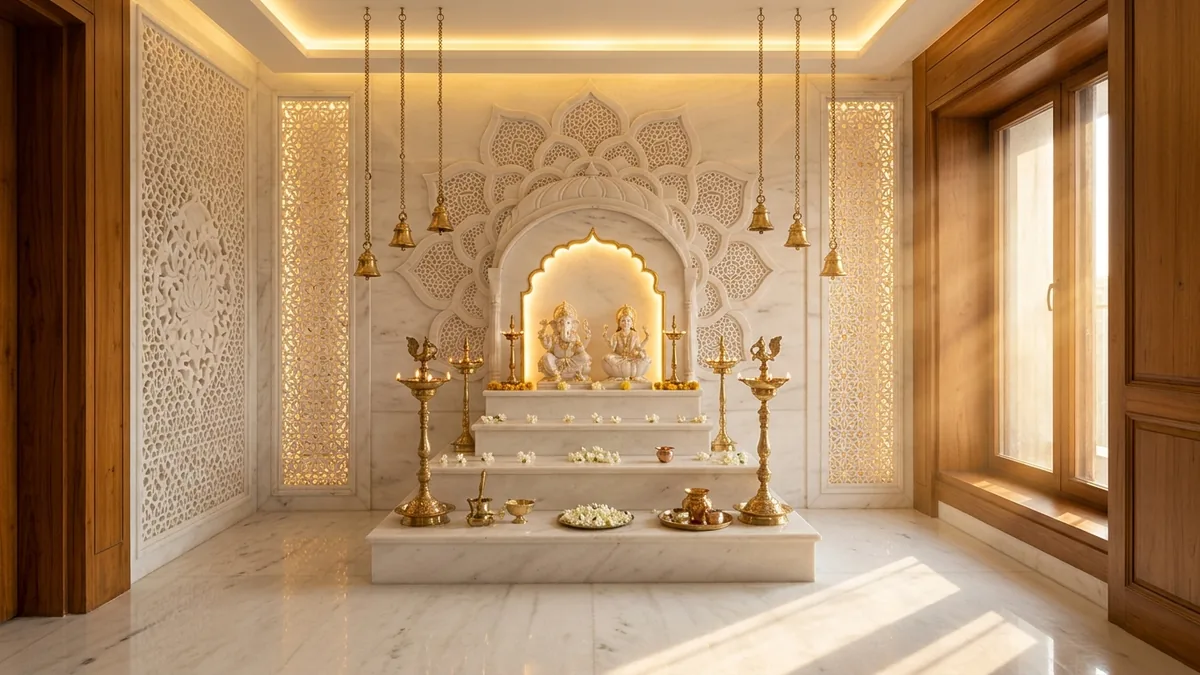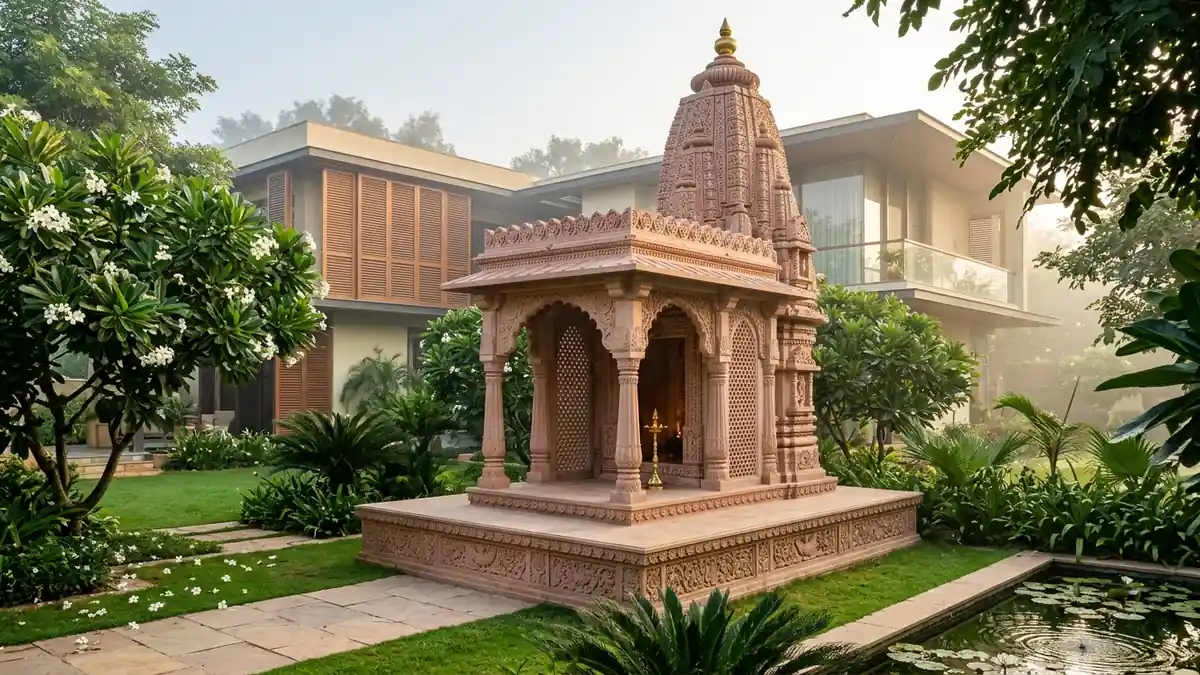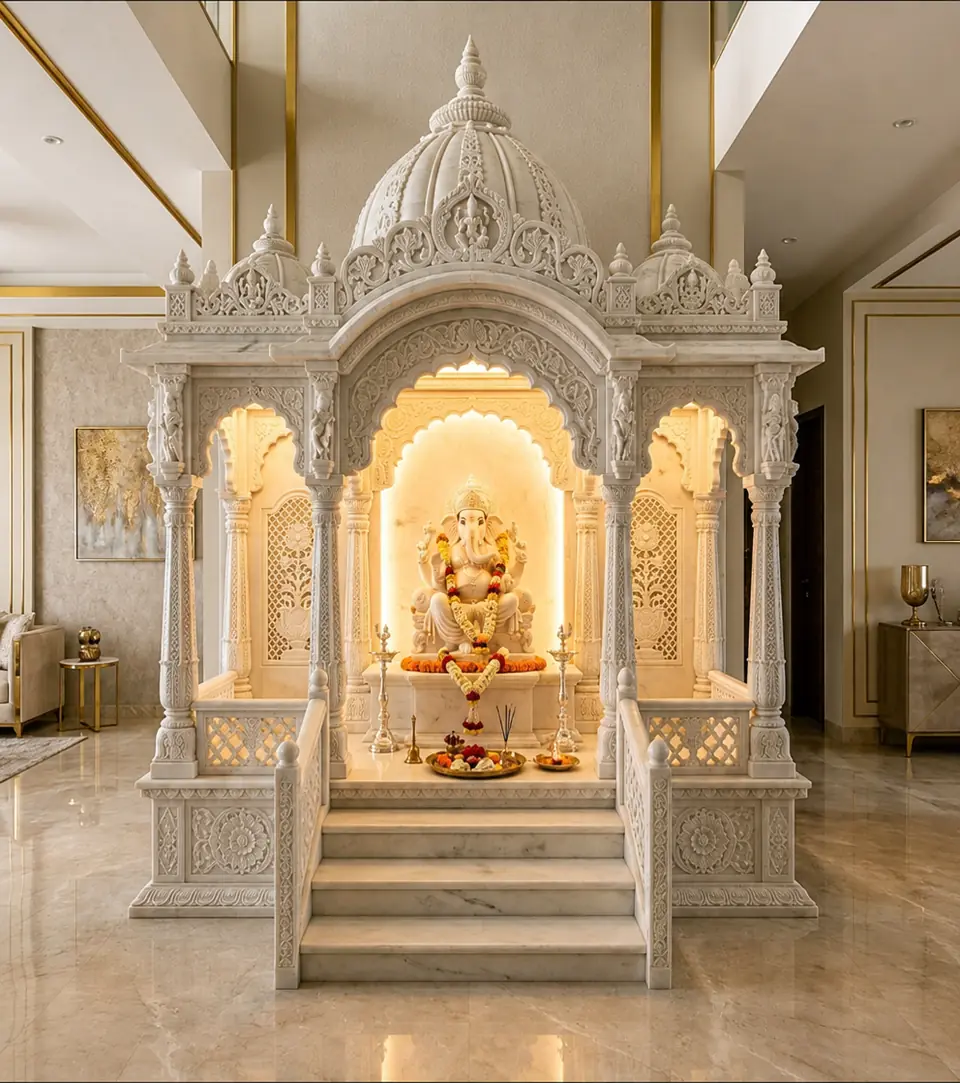

Most families building or remodelling a home want their prayer corner to feel genuinely peaceful the moment someone steps barefoot across its threshold. Applying thoughtful vastu for home mandir planning is not about rigid fear-based rules; in classical Indian architecture, Vastu and Shilpa Shastra codified daylight orientation, clean airflow, fire safety, and human posture.
Whether you have a dedicated 8-by-10-foot pooja room in an independent villa or a thoughtfully carved 3.5-foot niche in a high-rise apartment, getting the orientation, plinth elevation, and stone material right creates an unmistakable sense of stillness.
According to Vastu for home mandir architecture, place the pooja sanctum in the North-East (Ishanya), East, or North zone so worshippers face East or North during prayer. Elevate idols on a solid marble or sandstone plinth at least 18 to 30 inches above the floor, keeping domestic murtis between 6 and 12 inches tall.
- Ishanya (North-East) captures gentle morning solar rays without harsh afternoon western heat.
- Never place murtis directly on the floor; a carved stone peetham raises the deity eye line to chest level when seated on an asan.
- Avoid sharing a pooja backdrop wall directly with a bathroom plumbing shaft or tucking a temple beneath a used staircase.
- Pure white marble, cream sandstone, and sacred Bhainslana black stone align naturally with traditional Shilpa Shastra prescriptions.
In This Architectural Guide
1. Orientation and Wall Adjacency in Apartments and Villas
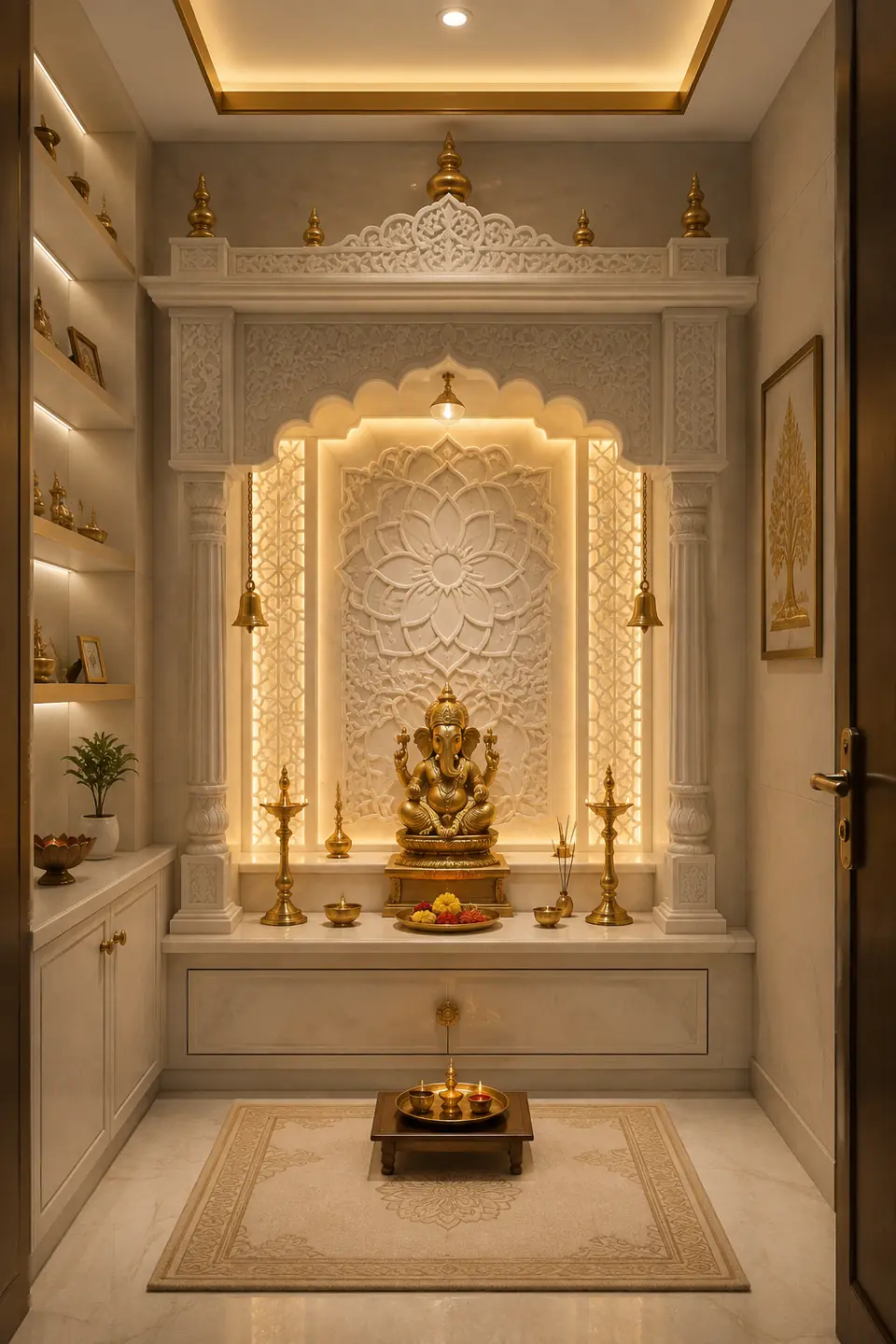
The North-East sector (Ishanya) is the primary zone recommended in Vastu texts because early morning sunlight enters from the East-North-East at a low, soothing angle while remaining shaded from intense afternoon heat. When positioning the stone mandir inside the room, place the temple against the East or North wall so that family members face East or North while praying.
In modern apartment layouts where the North-East houses a balcony or living room window, the pure East or North wall of the living-dining zone works beautifully when framed by carved stone jaali side partitions. If a pooja wall must back onto a utility or washroom wall due to fixed builder shafts, construct a 3-inch acoustic air-gap stud wall clad in solid marble so the mandir never touches plumbing masonry directly.
Explore Vastu-Aligned Marble Mandirs & Hand-Carved Murtis
Every Ishatva sanctum and deity sculpture is custom-proportioned to your pooja room plan and family traditions.
2. Plinth Height, Seated Eye-Level, and Murti Sizing
Classical Grihya Sutras distinguish clearly between a public community temple (Agama temple) and a household shrine (Griha Mandir). For daily home worship without elaborate priestly rituals, primary stone murtis are traditionally kept between 6 inches and 12 inches in height (roughly one vitasti or hand-span), ensuring warm, intimate connection.
Equally vital is vertical ergonomics. When you sit cross-legged on a woollen or kusha grass asan on the floor, your eye level sits roughly 30 to 34 inches off the ground. Designing the carved stone chowki or plinth between 21 inches and 28 inches high places the feet of the deity right near chest-to-eye level, allowing comfortable darshan and effortless lamp offering without hunching. Browse proportional deity sculptures in our Handcrafted Stone Murti Collection.
- Seated Pooja Plinth Height: 21 to 28 inches (530 to 710 mm) from finished floor level for floor-seated worship.
- Standing Pooja Plinth Height: 33 to 38 inches (840 to 965 mm) when elderly family members pray standing or seated on a chair.
- Garbhagriha Breathability: Leave at least 2 inches clear behind the murti and avoid pressing idols flush against glass or rear stone panels.
3. Auspicious Natural Stone Colours and Sacred Lighting
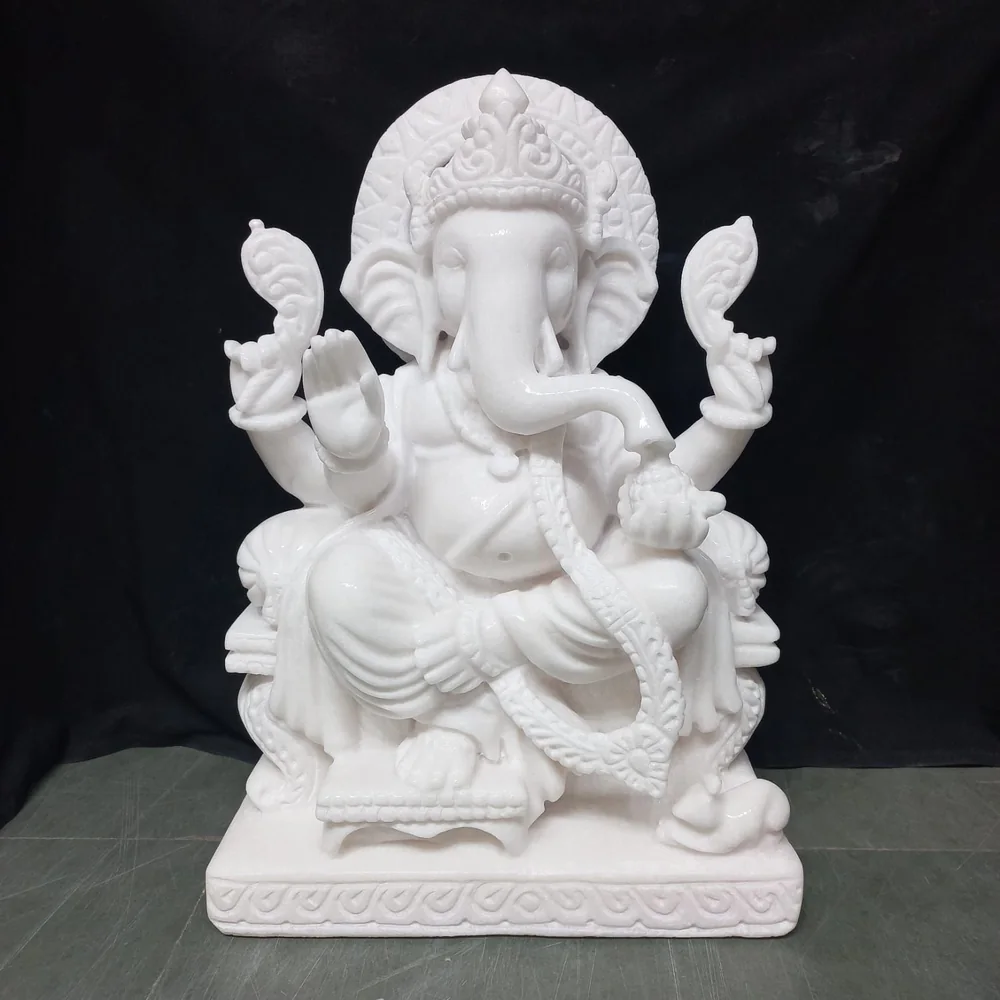
Natural quarried stone carries grounding earth energy (Prithvi tattva) without synthetic glues or plastics. Pure white stones like Makrana White Marble and Ambaji White Marble amplify calm sattvic clarity in compact rooms. Warm Bansi Paharpur Pink and Dholpur Beige Sandstones suit sunlit courtyard shrines, while dense Bhainslana Black Marble has been revered for centuries for carving Lord Shiva, Vishnu, Krishna, and Hanuman murtis.
Keep lighting warm and concealed. Soft 2700K to 3000K warm-white LED strips tucked behind a carved lotus or Om marble halo mimic natural ghee-lamp warmth, whereas harsh 6500K cool-blue tubelights flatten stone carvings and feel clinical. See complete spatial layouts in our Pooja Room Design Guide.
Technical Stone & Design Comparison
| Design Element | Recommended Vastu / Architectural Spec | Practical Reason |
|---|---|---|
| Room / Corner Zone | North-East (1st choice), East, or North | Receives gentle morning light; stays cool and quiet |
| Worshipper Facing Direction | Face East (morning vitality) or North | Aligns gaze toward natural daylight and calm focal wall |
| Household Murti Height | 6 inches to 12 inches (max 15 inches indoors) | Suits personal household devotion per Grihya tradition |
| Stone Plinth (Peetham) Height | 21-28 in (seated) / 33-38 in (standing) | Aligns deity feet near chest/eye level for comfortable posture |
| Preferred Materials | Makrana White Marble, Sandstone, Bhainslana Black | 100% natural earth mineral, fire-safe, non-toxic near diyas |
Pooja Room Vastu & Ergonomic Proportions
Key spatial checks before finalizing stone fabrication
Compass Alignment
Position the stone backdrop on the East or North wall so you face East or North.
Wall Clearance Check
Isolate from plumbing walls with an air cavity and never tuck beneath active stairs.
Ergonomic Plinth
Tailor base pedestal height to how elders and children in your family sit or stand.
Warm Indirect Glow
Backlight carved marble jaalis softly to echo traditional oil-lamp warmth.
Unsure How to Orient Your Mandir in an Apartment or Villa Plan?
Send us your room dimensions and compass direction; our studio will suggest optimal plinth height, stone, and layout.
Frequently Asked Questions
Can a home mandir have a dome or shikhara indoors?
Yes. Traditional domed mandaps and stepped shikharas are auspicious indoors provided there is at least 4 to 6 inches of clear breathing space between the kalash finial and the false ceiling, never wedged tightly against overhead beams.
What if North-East is not available for the pooja unit in my flat?
If the North-East corner falls in a balcony or bedroom window, the East wall or North wall of the living or dining space is the ideal secondary placement, framed cleanly with carved marble or sandstone jaali side screens.
Can black stone murtis be kept inside a white marble mandir?
Absolutely. Pairing a hand-carved Bhainslana Black Marble murti (such as Balaji, Krishna, Shiva, or Rama) inside a luminous Makrana White Marble mandir is a classic Indian temple tradition that creates striking visual focus during darshan.
Should pooja room doors be solid wood or carved jaali?
Ventilated doors combining seasoned Burma teak frames with carved stone or brass jaali panels are ideal, allowing heat and smoke from camphor and ghee diyas to vent safely while keeping the sanctum serene.